What Is Scoliosis in Children and Why Is Early Detection Important?
Learn what scoliosis is, how to identify it in children and adolescents, why early detection matters, and available treatment options.
Posted on 15/01/2026 at 19:02






- What Is Scoliosis? A Lateral Curvature of the Spine
- Early Detection Prevents Complications
- Treatment Allows a Normal Life
Scoliosis is a condition affecting the spine that often appears during childhood and adolescence, especially during periods of rapid growth.
Although in many cases it does not cause pain or obvious discomfort, early detection is essential to prevent the curvature from progressing and causing long-term physical or emotional issues.
Scoliosis is a spinal condition that requires early attention

What Is Scoliosis and How Is It Recognized
Scoliosis is an abnormal lateral curvature of the spine.
When viewed from behind, the spine does not appear straight but instead forms an “S” or “C” shape, often accompanied by rotation of the vertebrae.
This condition should not be confused with poor posture, as it is a structural deformity that cannot be corrected simply by “standing up straight.”
- Lateral curvature
- S- or C-shaped spine
- Not a posture issue
- Affects the vertebrae
Who Is Most Commonly Affected
Scoliosis can appear at any age, but the most common type develops in children around age 10 or 11, coinciding with puberty.
Girls are more likely to experience progression of the curve and require treatment.
The risk also increases when there is a family history, making medical monitoring especially important.
- Onset during puberty
- More common in girls
- Hereditary factor
- Rapid growth periods
Visible Symptoms That Often Go Unnoticed
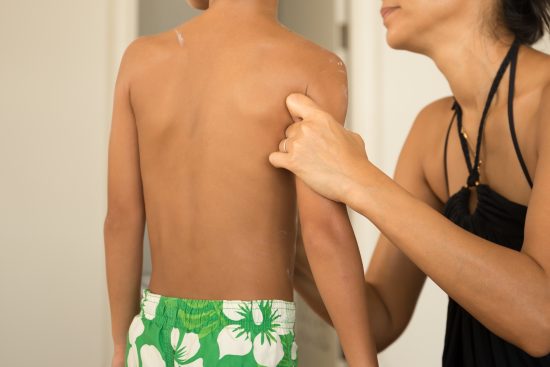
Most children and adolescents with mild scoliosis do not feel pain, so the first signs are usually visual.
Common changes include uneven shoulders, one shoulder blade protruding more than the other, hips at different heights, or asymmetry in the back when bending forward.
These details are often noticed while dressing the child or during everyday activities.
- Uneven shoulders
- Prominent shoulder blade
- Asymmetrical hips
- Uneven back
Pain and Possible Complications
In early stages, scoliosis rarely causes discomfort.
However, as the curvature becomes more pronounced, back pain may develop, especially during growth spurts.
In rare and more severe cases, the deformity can affect the rib cage and lead to breathing difficulties, reinforcing the importance of medical follow-up.
- Pain in later stages
- Back strain
- Severe cases
- Respiratory impact
Main Causes of Scoliosis
In most cases, the cause is unknown and is referred to as idiopathic scoliosis.
Other types include congenital scoliosis, related to abnormal vertebral formation at birth, and neuromuscular scoliosis, associated with neurological or muscular diseases.
Genetic and developmental factors play an important role.
- Idiopathic
- Congenital
- Neuromuscular
- Genetic factors
How It Is Diagnosed and Why Early Detection Is Key

Diagnosis begins with a physical examination in which the doctor evaluates posture and body symmetry.
If scoliosis is suspected, X-rays are ordered to measure the degree of curvature.
Detecting scoliosis in children early allows intervention before the curve progresses, especially during periods of rapid growth.
- Physical exam
- X-rays
- Curve measurement
- Early monitoring
Available Treatment Options
Treatment depends on the child’s age, the degree of curvature, and remaining growth.
Options may include periodic observation, use of an orthopedic brace, physical therapy, and in severe cases, surgery.
With proper management, most children and adolescents with scoliosis can live normal, active lives.
- Observation
- Bracing
- Therapies
- Surgery
Long-Term Prognosis

Scoliosis does not define a child’s quality of life when detected and treated early.
Ongoing medical follow-up and early detection are key to preventing complications and supporting healthy physical development.
- Good prognosis
- Active life
- Medical monitoring
- Early detection
Scoliosis in children and adolescents does not have to become a condition that limits development or quality of life.
The key lies in early detection, proper medical follow-up, and family support during growth stages.
With timely diagnosis and treatment tailored to each case, most children can remain active, perform daily activities, and develop healthily without the condition defining their future.
YOU MAY BE INTERESTED IN: Everything You Need to Know About Cataracts and How They Affect Your Vision!
Warning: This content is for informational and educational purposes only and does not replace evaluation, diagnosis, or treatment by a healthcare professional. If you suspect scoliosis or notice visible changes in a child’s posture, consult a medical provider.
Have you noticed posture changes in your children, or do you know someone who was diagnosed with scoliosis during childhood or adolescence?
 Related post